
Today, “Buy Now, Pay Later” (BNPL) feels like a thoroughly modern way to shop, a flexible way to spread payments over time. But the idea of buying on credit is anything but new. Its story stretches back thousands of years, winding through ancient marketplaces, medieval innovations, and the ethical frameworks of Islamic finance that have shaped credit across the Middle East and far beyond.
The Ancient Origins of Credit
BNPL’s earliest ancestors lived in the markets of the ancient world. In Mesopotamia, around 3000 BCE, merchants let trusted customers buy goods on credit and recorded the deals on clay tablets, an early system built on trust and community that laid the groundwork for structured lending. In ancient Egypt, farmers borrowed seed for planting and repaid with a share of the harvest. Informal as they were, these arrangements kept agricultural economies running.
Islamic Contributions to Ethical Credit
As trade routes spread across the Middle East, Islamic principles profoundly shaped how credit worked. The ethical framework of Islamic finance prized fairness, transparency, and the avoidance of exploitation—values perfectly suited to thriving markets. A prime example is Murabaha, where the seller discloses a good’s cost and agrees on a markup with the buyer. That markup forms the total price, paid in installments with no hidden fees or interest (riba), which Islam prohibits. Murabaha embodied the trust and transparency at the heart of Islamic commerce, and it remains widely used in Islamic banking today as an ethical alternative to interest-based credit. In the medieval markets of Cairo, Baghdad, and Damascus, commerce thrived on these principles, with merchants extending credit on clear, fair terms, treating buyers honestly while fueling economic growth. That approach would go on to influence European credit systems as the ideas traveled along Islamic trade networks.
Medieval Trade and the Spread of Credit Systems
As those trade networks reached Europe, they carried ideas that reshaped Western finance. During the Renaissance, merchants in Italian cities like Venice and Florence adopted instruments such as promissory notes, early credit tools that let buyers defer payment. They echoed the fairness and accountability built into Islamic credit. Meanwhile, in the Middle East, credit stayed rooted in personal relationships, where a handshake or a reputation for honesty often carried more weight than any formal contract, a testament to the culture of trust in trade.
The Industrial Revolution and Installment Payments
The Industrial Revolution forced credit to evolve again. Mass production made goods like machinery, furniture, and household appliances more available, but also more expensive. In response, companies introduced installment plans so customers could pay over time. Singer Sewing Machines and Ford Motors famously used the model to put their products within reach of a growing middle class. These were the direct precursors to modern BNPL, though they often carried interest or fees, unlike the transparent practices of Islamic finance.
The BNPL Revolution in the Digital Era
The rise of the internet in the late 20th and early 21st centuries transformed commerce, and BNPL emerged as one of its signature innovations. Companies like Klarna, Afterpay, and Tabby in the Middle East let consumers shop online and pay in interest-free installments. The model caught on fast with younger generations looking for alternatives to credit cards, and its simplicity and transparency resonated especially in the Middle East, where Islamic finance principles often guide financial behavior. Tabby, for instance, operates across the GCC with flexible payment options aligned to those values.
The Impact of COVID-19 on BNPL Adoption
The COVID-19 pandemic poured fuel on BNPL adoption as shoppers moved online. Across the Middle East, BNPL spread into fashion, electronics, and even travel. With a digitally connected, predominantly young population, the region embraced it as a practical way to manage money through uncertain times. For businesses, BNPL became a tool to lift sales and reach new customers, with retailers enjoying higher conversion rates and shoppers gaining the flexibility to spread payments without steep fees.
Islamic Principles in Modern BNPL
While global BNPL platforms focus on ease of use, those operating in the Middle East often weave in elements of Islamic finance to meet regional expectations. Shariah-compliant BNPL avoids interest, relying instead on profit-sharing or fixed fees, an approach that keeps things transparent and true to the ethical foundations of regional commerce. Models inspired by Murabaha, for example, disclose profit margins upfront, removing the ambiguity that clouds many traditional credit systems. That blend of modern convenience and ethical rigor makes BNPL a natural fit for consumers across the Middle East.
The Future of BNPL: Returning to Commerce and Industry
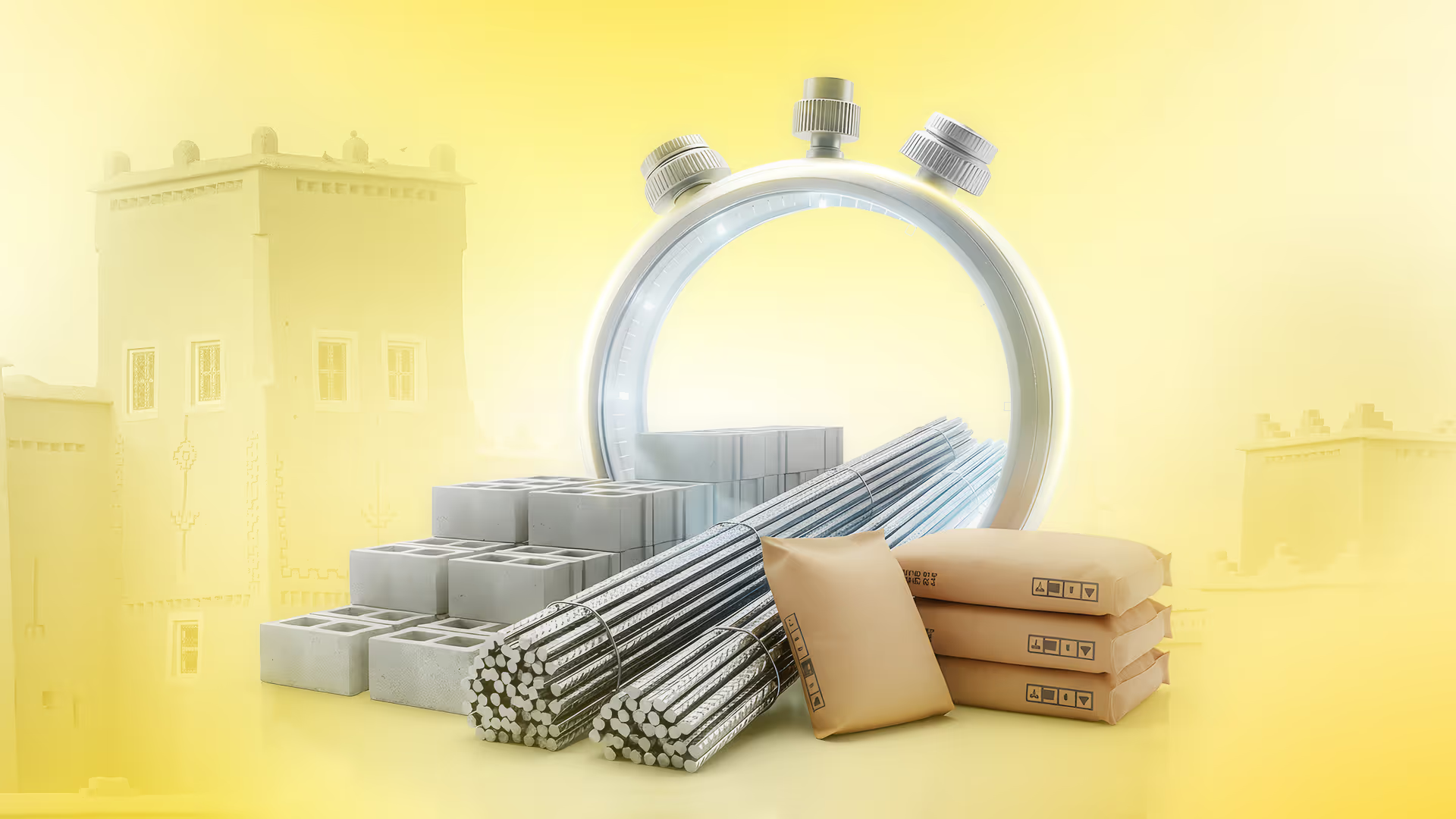
As BNPL grows, its potential reaches well beyond consumer purchases. More and more, businesses are adopting B2B BNPL, giving suppliers and buyers the flexibility to manage cash flow and access credit in ways that fuel trade and industry. It’s a return to the historical roots of credit, which always centered on facilitating trade rather than personal spending. By letting businesses buy raw materials, invest in growth, or bridge seasonal cash flow gaps, B2B BNPL supports macroeconomic growth, and because it often operates on clear, interest-free terms, it sits comfortably alongside Islamic finance principles. These solutions emphasize fairness, trust, and mutual growth, echoing the practices of early Islamic merchants.
BNPL and Saudi Vision 2030
BNPL’s potential aligns seamlessly with Saudi Vision 2030 and its goals of economic diversification, entrepreneurship, and innovation. By facilitating trade and powering SME growth, BNPL solutions like Tabby for businesses help Saudi companies manage cash flow flexibly and focus on innovation and expansion. Ultimately, the future of BNPL in Saudi Arabia is about more than convenience—it’s about building a more dynamic and inclusive economy. By pairing digital innovation with ethical values, BNPL can transform commerce and unleash the entrepreneurial spirit driving Vision 2030 forward.